
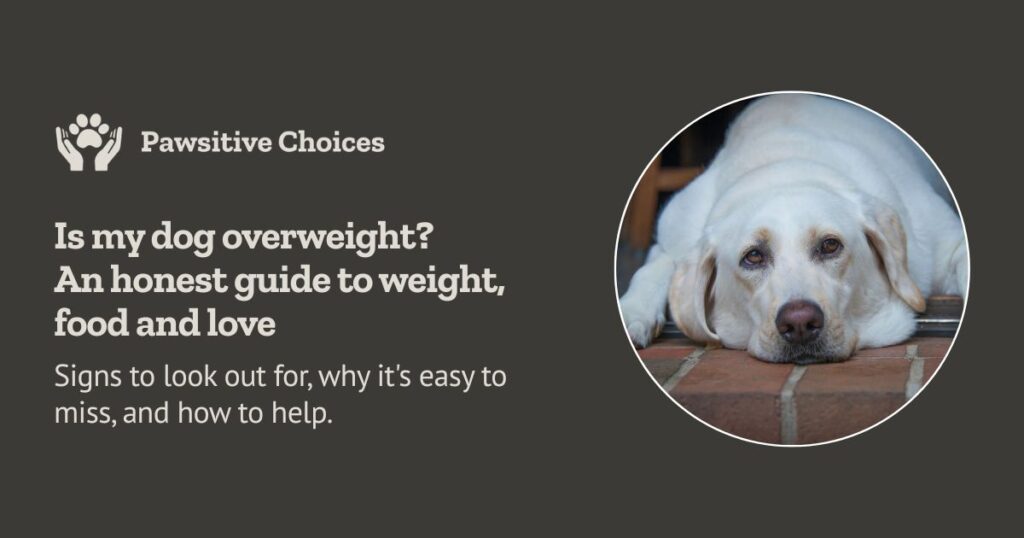
Why weight matters for your dog, not just their waistline
Extra weight puts real strain on a dog’s body. Joints work harder. Conditions like arthritis and diabetes become more likely. Breathing and exercise get harder, and anaesthesia carries more risk. It can shorten a dog’s life.
I don’t think about this in terms of how a dog looks. I think about how comfortably they get through their day.
Why it’s so hard to tell
Most owners aren’t missing this because they don’t care. They’re missing it because so many dogs are carrying extra weight now that it’s become normal to see.
Vets estimate that on average 46% of UK dogs are overweight or obese, according to PDSA’s 2023 PAW Report. Owners see it very differently. Around 8 in 10 believe their own dog is an ideal weight.
I don’t think that’s owners knowingly let weight creep up. Many have just lost sight of what a healthy dog actually looks like, because we see so few of them.
It can feel like a criticism to hear your dog is overweight so I always make sure my concerns are taken as that. Concerns not criticisms.
I had a lovely Westie recently who was overweight and the downfall was a high carb diet and lots of sugary treats. These could most certainly be impacting his behaviour and he was rarely calm.
Together we worked through what alternatives were available and the owners made some really easy adjustments. Very quickly his behaviour improved and he was showing prolonged periods of calm. After a few months he was walking better, sleeping better and definitely looking better.
What a healthy body condition actually looks like
Forget the scales for a moment. A number in kilograms only tells you part of the story, because it varies so much from dog to dog. Body condition is a far better guide.
In a dog at a healthy weight, you should be able to feel their ribs easily, without pressing through padding. From above, you should see a waist. From the side, their tummy should tuck up behind the ribcage, not run level with it.
If you’re not sure what that feels like on your own dog, that’s a completely normal thing to ask me, or your vet, at your next visit.
Why “chunky” and “greedy” aren’t as harmless as they sound
The words we use matter more than people think. “Chunky”, “solid” and “greedy” can sound almost affectionate, but they let weight gain slide into being part of a dog’s personality rather than something that can actually change.
Labradors get this a lot, and I say that as someone who loves the breed. “Greedy” isn’t a personality trait. It’s usually a dog who’s brilliant at asking for food, and an owner who finds it hard to say no. Dogs don’t feed themselves.
When food becomes a way of saying sorry
I rarely meet an owner who’s overfeeding their dog out of anything other than love. Giving your dog something tasty feels good, for both of you. Food can also get tangled up with guilt: a shorter walk than planned, a long day at work, a bit of extra affection you want to show. An extra treat can feel like an apology.
It’s also an easy answer to behaviour. A dog barking, pestering or getting under your feet often gets a chew to settle them. None of that seems significant on its own, but an extra biscuit here, a bit of your dinner there, and a few treats through the day all add real calories on top of normal meals.
Treats aren’t the enemy here. Food is properly useful for training and enrichment, and I use it constantly, in sessions and with my own dog. The issue is total calories, not treats existing at all. As a general guide, treats should make up no more than around 10% of your dog’s daily food.
“But that’s what the feeding guide says”
This catches a lot of owners out. If your dog weighs 30kg, it’s easy to feed for a 30kg dog, even if their healthy weight should actually be closer to 25kg. Feeding based on current weight simply maintains that weight.
Feeding guides on packaging are exactly that: guides. Your dog’s actual needs depend on their age, activity levels, health, whether they’re neutered and their individual metabolism. Weighing food, rather than estimating a scoop or a handful, makes a bigger difference than most owners expect. A slightly generous handful twice a day adds up fast over months and years.
What about older dogs?
Weight is especially easy to miss in older dogs, because changes in mobility get put down to age.
Sometimes that’s fair. But age and extra weight often exist together, and it’s worth telling them apart. An older dog naturally needs fewer calories as they slow down, while any extra weight adds even more strain to joints that are already working harder than they used to. Weight loss won’t make an old dog young again, but keeping them at a healthy weight can make a real difference to how comfortable their later years are.
A better question than “does my dog look overweight”
Rather than focusing on how your dog looks, it’s worth thinking about how they get through an ordinary day. Can they get up off the floor without a struggle? Do they tire quickly on a walk, or start panting heavily after not very much at all?
That’s a completely different conversation. Appearance doesn’t come into it. Comfort does.
How to raise it without the guilt
Telling someone their dog is overweight can feel very personal, because it can land like criticism of how much they love their dog. Shame doesn’t usually help. If anything, it tends to push people away from getting the help their dog needs.
I’d always rather start with “can I talk to you about something I’ve noticed with your dog” than “your dog is overweight.” The first opens a conversation. The second just closes one down.
Small changes that make the biggest difference
You don’t need to overhaul everything at once. Weigh meals properly. Count training treats as part of the day’s food, not extra. Swap the most calorific snacks for lower calorie ones. Cut back on scraps, and make sure your dog gets exercise that actually suits them. Small things, but they add up.
Food doesn’t have to disappear from your relationship with your dog. It hasn’t from mine. I still use it for training, enrichment and plain enjoyment. It just needs to be accounted for.
When to speak to your vet
If you’re at all concerned about your dog’s weight, speak to your vet before changing much. They can help set a realistic target weight, rule out any underlying medical reasons for the weight gain, and make sure any changes are safe. A canine nutrition professional can also help alongside that.
And please don’t feel embarrassed about asking. Noticing your dog might be carrying too much weight isn’t a failure on your part. It’s the first step to helping them feel more comfortable.
Frequently asked questions
How do I know if my dog is overweight?
Feel for their ribs. You should find them without pressing hard. Look for a visible waist from above and a tucked tummy from the side. If you’re unsure, ask me or your vet to check their body condition at your next visit.
Should I feed my dog exactly what the packet says?
Not necessarily. Feeding guides are a starting point, not a rule. Your dog’s ideal amount depends on their age, activity and individual metabolism, so it’s worth weighing food and adjusting based on their body condition rather than the number on the bag.
Can older dogs still lose weight safely?
Yes, with the right approach. Any weight loss plan for an older dog should be guided by your vet, since it needs to account for their other health needs, but keeping an older dog at a healthy weight can genuinely improve their comfort and mobility.
It’s not about the number on the scales
This isn’t about having the leanest dog at the park or hitting a perfect number on the scales. It’s about your dog being able to move comfortably, enjoy their walks and stay with you, as healthy as possible, for as long as possible.
If you’d like an honest, no judgement conversation about your dog’s weight, or anything else about how they’re doing, I’m happy to have a chat. You can get in touch by filling in the form below.