
What does “reactive” actually mean?
Many dogs today are described as reactive.
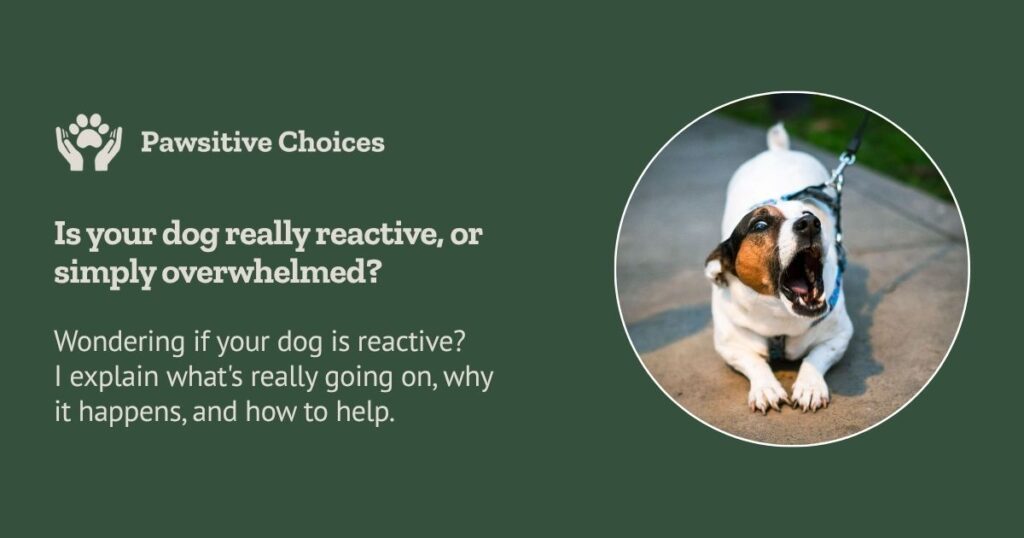
In reality, all dogs are reactive, just as all people are. Being reactive simply means responding to something in the environment. But the term has come to describe dogs who bark, lunge, pull, freeze, or become intensely focused on other dogs, people or moving objects in a way that seems excessive or out of context.
These behaviours can feel incredibly stressful to live with. But the label itself doesn’t explain what’s really going on.
For some dogs, it’s fear. They’re trying to make the scary thing go away. For others, particularly on lead, it’s frustration, because they can’t get to what they want, often another dog or person.
In most cases, what looks like aggression is actually a dog who feels overwhelmed.
When the world feels too much
Dogs experience the world through their senses. Busy environments full of movement, unfamiliar dogs, loud noises and unpredictable interactions can be genuinely difficult to process. If a dog has had limited chances to learn how to cope with these situations, or has had a bad experience, it doesn’t take much for them to tip into overwhelm.
This is far more common than most owners realise. A 2026 US study of over 43,000 dogs found that more than 84% showed at least some sign of fear or anxiety in everyday situations, and that unfamiliar people and other dogs were the most common triggers. What looks like bad behaviour is very often fear, and that’s true for a huge number of dogs, not just the ones we’ve decided to call reactive.
When a dog tips into overwhelm, their behaviour escalates. Barking, lunging, pulling or freezing are all ways your dog tries to cope when they no longer feel able to process what’s happening around them.
These are signs of a dog who’s struggling, not a badly behaved one.
Why distance can be so powerful
One of the most helpful things you can do for an overwhelmed dog is simply give them more space.
Distance lets your dog observe what’s happening without feeling pressured to engage. Just as you probably feel calmer when you step away from something stressful, your dog benefits from having time and space to think too.
When they feel safer, they start to settle. Learning can only happen when a dog feels emotionally safe.
Looking beyond the label
When you stop focusing on the word reactive and start looking at your dog’s emotional experience, everything changes.
Instead of asking “how do I stop this behaviour”, I encourage the owners I work with to ask better questions.
- What’s making this situation difficult for my dog?
- What would help them feel safer?
- What pace of learning is right for them?
As the one holding the lead, it’s your job to advocate for your dog, rather than repeatedly putting them into situations they can’t yet cope with.
Feeling safe isn’t just about being protected from physical harm. Emotional safety matters too. By building your dog’s confidence, reducing their stress and helping them feel calmer underneath, not just look calmer, you can help them feel increasingly comfortable in situations they used to find overwhelming.
The good news is that what helps is often simpler than people expect. Small changes to routine, walking equipment, walking routes, diet, enrichment, consistency and handling can make a remarkable difference.
There’s rarely a quick fix. In fact, relying on punishment or aversive equipment to suppress the behaviour often increases stress and makes things worse over time. You don’t need to hurt your dog to help them. With patience, consistency and a structured plan, you can create lasting change while protecting both your dog’s welfare and your relationship together.
One small thing you can try today
The next time your dog notices something that would normally trigger a reaction, calmly increase the distance rather than asking them to cope.
Watch what happens. Does your dog soften, look away, sniff the ground or check in with you? Small signs like these often mean they feel safe enough to make a better choice.
Very often, a few extra metres are all a dog needs.
And what about the humans?
Living with a reactive dog can be exhausting.
Many of the owners I work with feel anxious before every walk. They worry about being judged, dread seeing another dog around the corner, and often feel guilty that they’re somehow getting it wrong.
You’re not alone.
I’ve had people shout at me to get my dog “under control”. I’ve felt the disapproving looks as if I have done something wrong when my dog barks at another.
It’s easy for me to shrug off as these are people who don’t actually understand dogs or recognise a dog who is actually struggling. My sole focus is ensuring my dog feels Ok in difficult situations. And he does now.
Supporting reactive dogs isn’t just about helping the dog. It’s about supporting the person holding the lead too.
That’s why my dog behaviour support includes a written plan after every session, realistic goals, and regular check ins between visits, so you’re never left figuring things out alone. You’ll have practical homework that feels achievable, so you and your dog can build confidence together.
I work with reactive dogs and their owners across Ayrshire, East Kilbride and Glasgow South Side, and online.
Frequently asked questions
Is my dog reactive or just excited?
It’s not always easy to tell. Excitement usually looks loose and bouncy, with a relaxed body. Reactivity tends to come with tension, fixed staring, or a struggle to settle even once the trigger has gone. If you’re not sure, it’s worth having someone experienced take a look, rather than guessing from the behaviour alone.
Can a reactive dog be fully cured?
I won’t promise a cure, because I can’t guarantee an outcome for any dog. What I can say honestly is that most dogs make real, lasting progress with the right support, time and patience. The goal usually isn’t a dog who never reacts again, it’s a dog who feels safe enough, more often, to make a better choice.
How do I stop my dog reacting on the lead?
Increasing distance from whatever’s triggering them is the fastest way to help in the moment. Longer term, it’s about building their confidence and reducing their overall stress, not suppressing the behaviour. There’s no quick fix, and anything that promises one is usually relying on methods that make dogs feel worse, not better.
You don’t have to work this out alone
This isn’t about hitting some perfect standard of behaviour. It’s about your dog feeling safe enough to enjoy their world again, and you feeling confident enough to enjoy it with them.
If you’re struggling with your dog’s reactivity, I’d be happy to chat through what’s happening and help you understand why your dog is behaving this way. There’s always a reason for behaviour, and with the right support, things really can get better.
You can book a free call by completing the form below.